Four buildings that are made again every winter out of snow and ice, and taken back by the ground each spring. What they have in common is a wall you cannot see through and a material that carries light instead of admitting it. Permanent hotels with an ice bar or a cold room attached are not in this section.
[ 01 · ice hotels ]
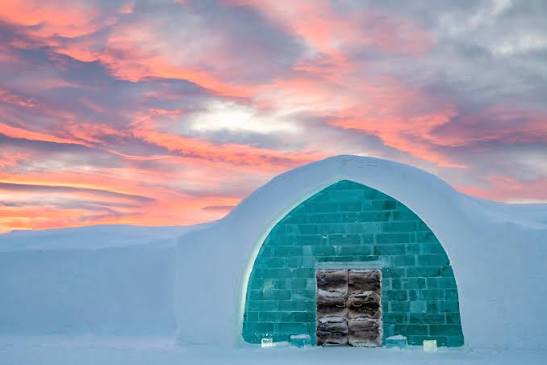
Hôtel de Glace
Québec, Canada · North America
[ opening note ]
A building rebuilt each winter from snow and ice, then given back to the ground in spring
[ where the sun lands ]
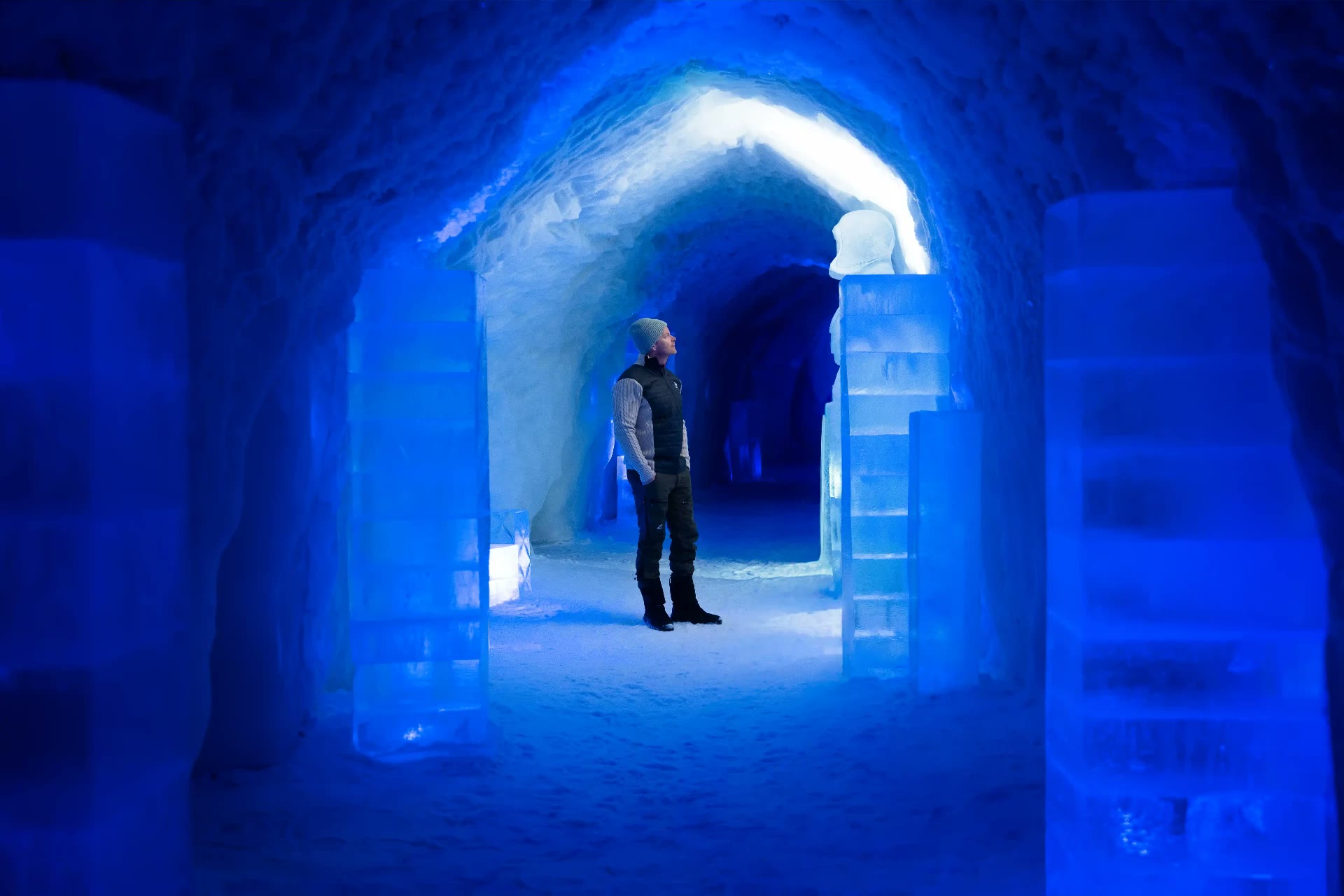
Snow outside the walls throws daylight back at the building, and the ice blocks pass it along. Sculpted panels and cut columns move that pale light sideways through the halls. The corridors have no windows at all, so whatever arrives has come through the material itself.
[ where the shade is kept ]
Thick snow vaulting takes in sound and light together, and the deeper suites sit far from any opening. Fur and timber surfaces lift the glare off the walls beside them. The heated pavilions on the same site are ordinary buildings, and they shade their rooms with blinds.
[ what stays lit ]
Coloured lamps are set inside the ice, so the walls themselves become the source once it is dark. The bar counter, cut from a single block, carries light from below. Outside, the snow holds every stray beam.
[ before you set out ]
Ask which parts of the site are heated, and pack a dry change of clothes for the morning.
[ sources · April 2027 ]
[ 02 · ice hotels ]
Kirkenes Snowhotel
Kirkenes, Norway · Europe
[ opening note ]
A snow building raised again each season beside the fjord at Kirkenes, in the far north
[ where the sun lands ]
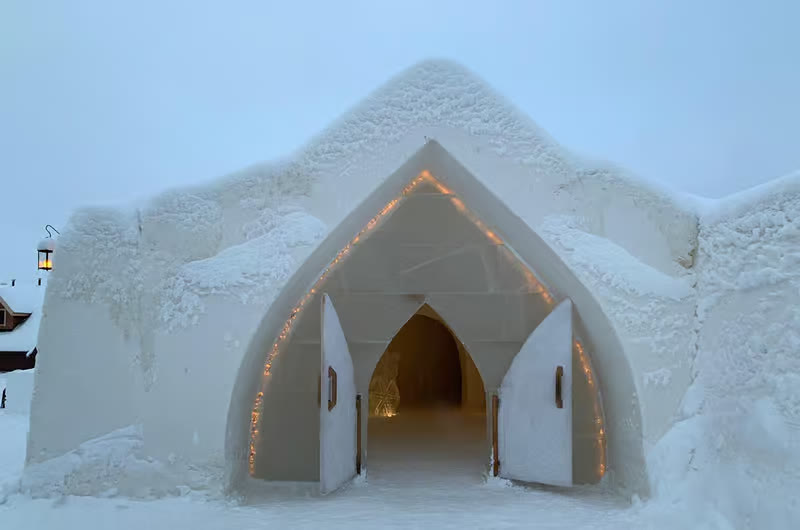
Daylight here arrives off water and snow rather than straight through glass. The snow corridors take it faintly, while the timber cabins along the shore face the fjord with plain windows. Reflection does most of the work through the winter, when the sun stays low over the water.
[ where the shade is kept ]
Inside packed snow there is no direct light at all, and the ice suites keep an even dimness from wall to wall. A metre of snow holds it there. Beyond the buildings, birch scrub and the slope behind the site block what little comes from the land side.
[ what stays lit ]
Lamps set into the snow tint the sculpted walls from within, and the timber cabins along the shore keep their windows warm. Over the site, through the long polar night, the aurora is what people come outside to watch.
[ before you set out ]
Arrange the transfer from Kirkenes in advance, and bring boots you can walk on packed snow in.
[ sources · March 2027 ]
[ 03 · ice hotels ]
SnowCastle of Kemi
Kemi, Finland · Europe
[ opening note ]
A snow fortress on the Bothnian shore, rebuilt to a new plan each winter with rooms inside it
[ where the sun lands ]
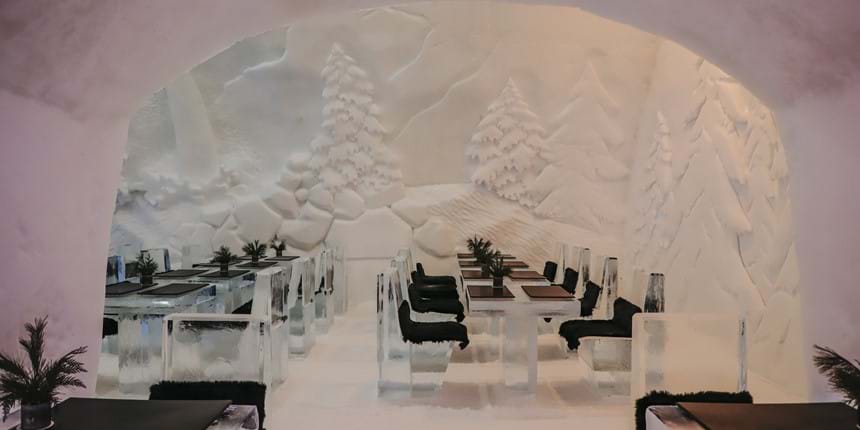
Out on the frozen gulf nothing stands in the way of the low sun, and the castle sits in open white. Its walls read that light rather than admit it. The glass-fronted restaurant and the year-round Experience building beside it take the same light directly through their windows.
[ where the shade is kept ]
Vaulted snow passages carry no openings, so the chapel and the sleeping chambers stay dim from end to end. Ice sculptures set into niches interrupt whatever falls on them. Depth of wall, not shutters, is what keeps this interior cool and shadowed through the season.
[ what stays lit ]
Coloured light is worked into the carved walls and into the ice furniture, so the whole castle reads as a lantern from the shore. The restaurant windows add a warmer band along the ground beneath it.
[ before you set out ]
The snow castle is a winter build; check which parts of the site are open before you travel.
[ sources · March 2027 ]
[ 04 · ice hotels ]
Iglu-Dorf
Zermatt, Switzerland · Europe
[ opening note ]
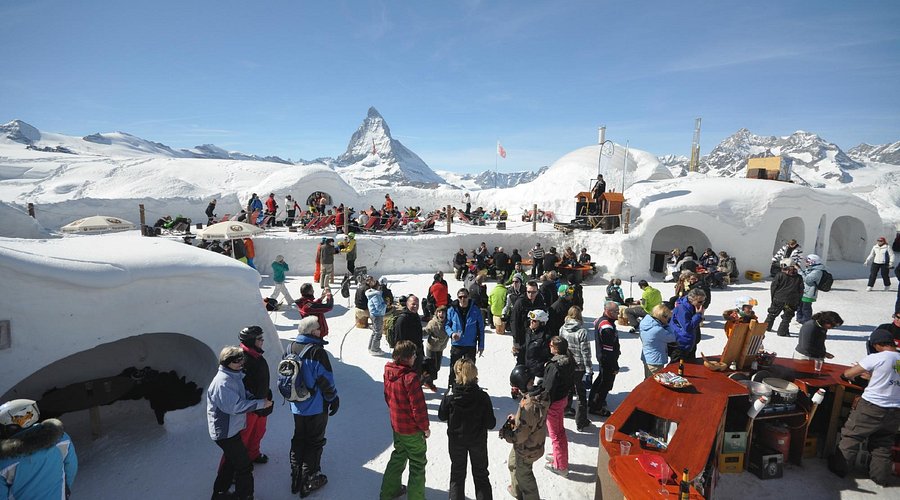
A village of snow domes built each winter high above Zermatt and cleared away again in spring
[ where the sun lands ]
High ground and open snowfields leave the domes entirely exposed, and the surface around them stays bright. Each dome has one low entry tunnel, so almost nothing reaches the sleeping chamber inside. What guests see of the sun, they see out on the terrace rather than indoors.
[ where the shade is kept ]
Curved snow shells hold a steady half-dark, and the tunnels bend so that even the entrance stays shadowed. Sheepskin and insulated mats sit between guests and the floor. The Matterhorn and the ridges around it put the whole site into shadow from one side.
[ what stays lit ]
Small lamps hang inside the domes and turn the packed snow faintly blue. Seen from outside, the village becomes low mounds with light leaking from their entrances, and the valley lamps sit far below.
[ before you set out ]
You reach the village by lift and then on foot, so travel light and dress for the altitude.
[ sources · February 2027 ]
[ how this is written ]
Sun, shade and lamplight here describe how a building is made, not how a day feels. All of it comes from published material, rewritten in our own words, and the bracket at the end of an entry gives the month that material was last opened.